
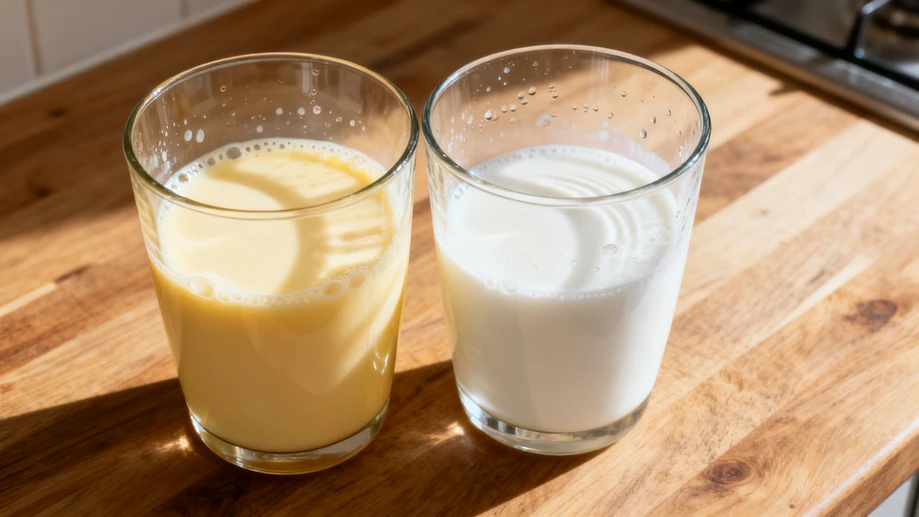
Why Skim Milk Might Be Doing Your Body More Harm Than Good
New research shatters decades of nutrition dogma revealing surprising truths about fat content and health impacts
For over half a century, skim milk has worn the golden halo of health while its full-fat cousin languished in nutritional disgrace. Dietitians consistently recommended pouring away the creamy layer, doctors endorsed the fat-free version for heart patients, and supermarket shelves overflowed with cartons promising "99% fat-free" perfection. This deeply ingrained belief stems from logical-sounding assumptions: fewer calories mean easier weight control, less saturated fat equals healthier arteries, and eliminating cholesterol reduces cardiac risks. Yet emerging science paints a startlingly different picture of our relationship with dairy fat that challenges fundamental nutrition principles.
Surprisingly, the weight management argument for skim milk falters under scientific scrutiny. Multiple large-scale studies including a Journal of Nutrition analysis of 18,000 women found no significant difference in weight gain between full-fat and low-fat dairy consumers. Some research even suggests that whole milk drinkers tend to maintain healthier body weights. The mechanism appears linked to satiety hormones triggered by milk fats, which create longer-lasting fullness and reduce subsequent calorie intake. When subjects drank skim milk, they compensated by consuming 8-14% more calories throughout the day compared to whole milk drinkers according to European clinical trials. Fat molecules slow digestion, providing steady energy release that prevents blood sugar spikes and crashes driving snack cravings.
Turning to cardiovascular health, the case against milk fat unravels further. Comprehensive reviews published in the American Journal of Clinical Nutrition found no association between dairy fat consumption and increased heart disease or stroke risk. Contrarily, research from Uppsala University suggests that milk fat biomarkers correlate with lower diabetes risk. Natural milk fats contain over 400 unique fatty acids and bioactive compounds that may moderate inflammation and improve lipid metabolism. When fat is removed during skimming, valuable nutrients like vitamin D, vitamin K2, and conjugated linoleic acid become stripped away or poorly absorbed without their natural fat transporters. Fortified skim milk attempts compensation but misses critical synergies nature perfected.
Processing transforms skim milk beyond simple fat removal. Industrial centrifugal separation alters milk's physical structure while high-temperature pasteurization degrades heat-sensitive proteins. Many manufacturers add powdered milk solids to improve skim milk's watery texture and palatability. This introduces oxidized cholesterol compounds not present in fresh whole milk. The more concerning nutritional consequence involves vitamin depletion – removing fat reduces absorption of the remaining fat-soluble vitamins already present in milk. Children exclusively drinking skim milk develop vitamin deficiencies more frequently according to pediatric research from Boston University.
Beyond human nutrition, skim milk production creates ecological dilemmas rarely discussed. Separating milk requires additional mechanical processing that increases energy consumption by approximately 15% per liter according to dairy industry assessments. The resulting cream byproduct gets redirected into butter, ice cream, or processed foods – commodities requiring more resource-intensive transportation and storage. Consequently, your glass of skim milk carries a larger carbon footprint than locally consumed whole milk. This environmental impact echoes the nutritional irony: what we discard as "unhealthy" requires significant energy to isolate and redistributes nutrients inefficiently through the food system.
Nutrition science increasingly recognizes that demonizing single nutrients leads to flawed dietary patterns. Those who avoid full-fat dairy often replace it with sugar-laden alternatives or refined carbohydrates presenting greater health risks than milk fat ever posed. Evidence-based recommendations now suggest choosing naturally fatty foods over industrially manipulated versions. For most healthy individuals without specific medical conditions, whole milk delivers superior satiety, superior nutrient absorption, and aligns better with our evolutionary relationship with dairy. The fat-free era's legacy persists in supermarket refrigeration sections, but the science has clearly moved beyond this oversimplified nutritional paradigm. The healthiest choice might just be the one that tastes creamiest.