
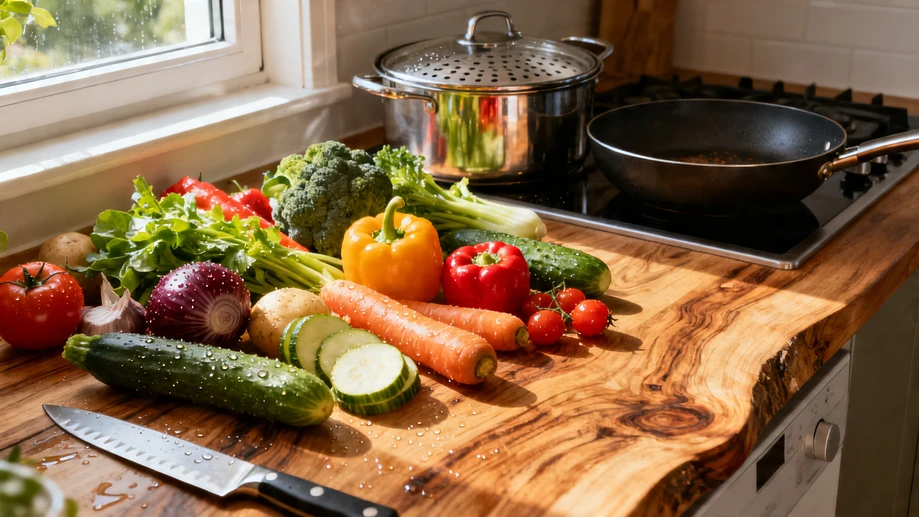
How Your Cooking Methods Impact Vitamins in Fruits and Vegetables
Discover how culinary techniques determine nutrient retention unlocking maximum health benefits from everyday ingredients
Ever wonder why raw vegetable enthusiasts passionately defend their crunchy habits while your grandmother insists on simmering spinach until it wilts? The answer lies not in cultural preferences but in science's intricate dance between produce preparation and vitamin preservation. This culinary chemistry impacts every bite, transforming how nutrients enter your bloodstream. Understanding this relationship could revolutionize your approach to meal preparation.
Different vitamins respond uniquely to heat, water, and air exposure. Water-soluble vitamins, notably vitamin C and B-complex members like folate and thiamine, dissolve easily in cooking liquids. Studies reveal boiling broccoli for ten minutes leaches over 50% of its vitamin C into the water, whereas steaming preserves significantly more. The fragility extends to cutting methods; finely chopping peppers dramatically increases surface area allowing oxidation to devour precious ascorbic acid before the knife hits the cutting board.
Contrastingly, fat-soluble vitamins A, D, E, and K display greater resilience against cooking methods but require specific conditions for optimal absorption. Tomatoes cooked with olive oil demonstrate this perfectly; heat breaks down cellular walls releasing lycopene while the accompanying fats facilitate its uptake. Similarly, pureeing cooked carrots rather than eating them raw enhances beta-carotene bioavailability by nearly 30%, turning simple preparation choices into significant nutritional upgrades.
Microwaving often surprises people with its nutritional efficiency. By cooking food rapidly with minimal water, it preserves water-soluble vitamins better than boiling or stewing. Research comparing spinach preparation found microwaved spinach retained 90% of its folate versus only 20% in boiled spinach. The oven's dry heat also offers advantages for certain vegetables; roasting sweet potatoes concentrates both flavor and vitamin A content through caramelization.
Timing dramatically influences outcomes regardless of method. Extended cooking durations degrade heat-sensitive compounds exponentially. Green beans kept at a rolling boil for thirty minutes lose nearly 80% of their antioxidant capacity while flash-sautéing for five minutes retains over 90%. Even storage after cooking matters; refrigerating cooked vegetables overnight causes further vitamin C depletion with each reheating cycle accelerating nutrient loss.
Practical strategies emerge from these principles: Combine raw and cooked produce in meals to maximize vitamin variety. Steam rather than boil vegetables when possible, reserving nutrient-rich cooking water for soups. Add citrus juice to cooked greens to replenish diminished vitamin C. Pair healthy fats with carotenoid-rich orange and red vegetables. Embracing these techniques transforms ordinary cooking into intentional nutrient preservation, empowering you to extract nature's full potential from every vibrant fruit and wholesome vegetable entering your kitchen.